Indoor vs Outdoor Hard Courts
Indoor vs Outdoor Hard Courts: Why Indoor Tennis Plays Differently
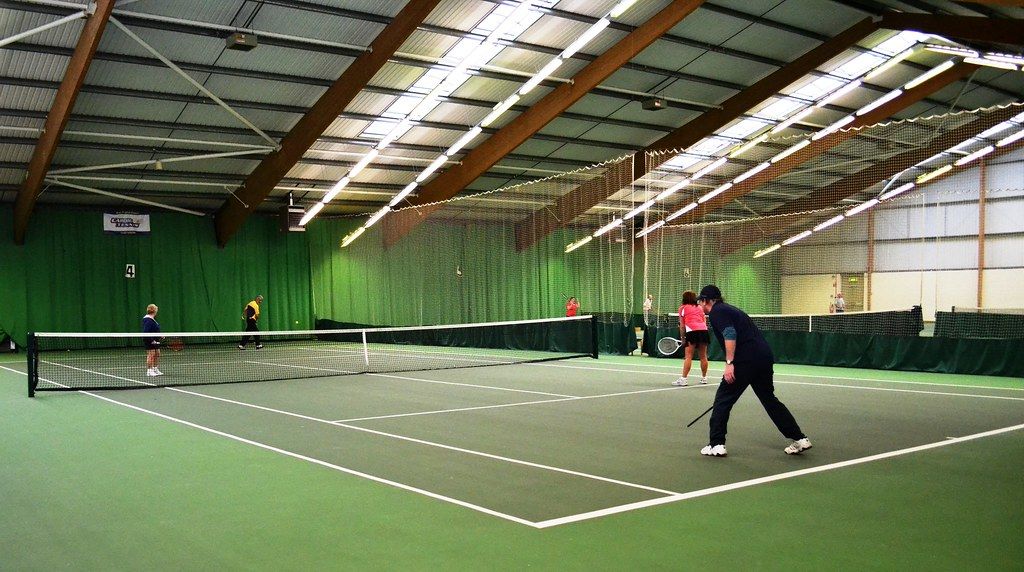
Indoor hard courts often feel quicker and more predictable than outdoor ones, even when the surface is made of the same material. The difference comes mostly from the building, not from the court: a roof removes the weather, and the weather is what makes outdoor tennis unpredictable.
What the roof changes
"Indoor" describes the playing environment, not the surface. The ITF measures court pace in five bands from slow to fast, and two hard courts of the same broad type can still land in different bands. So an indoor court is not automatically fast; some indoor events deliberately lay a slower surface.
What the roof does guarantee is stable conditions. There is no wind to push the ball off line and no sun to look into on the serve. The air is dry and kept at a steady temperature, so it offers less drag on the ball and does not change between the first set and the third. Balls also keep their bounce longer, because they are not soaking up moisture or grit from outdoors.
Light matters as well. Constant artificial light and a dark, even backdrop make the ball easier to pick up early, which helps the returner as much as the server. Outdoors, shadows across the court in the late afternoon can make the same shot much harder to read.
Who tends to benefit
Hard courts in general give a truer, more consistent bounce than grass or clay. Indoors, that consistency makes attacking tennis easier: players can aim closer to the lines with more confidence, and a big first serve is not blown off course by a gust. That is why flat hitters and strong servers often feel at home indoors.
It is a tendency, not a rule. Pace, ball type and the players' form matter more than the roof, and counter-punchers win indoor titles too. The women's indoor event in Luxembourg, played for years in the CK Sportcenter in Kockelscheuer, had champions with very different styles.
Why the autumn season moves indoors
The hard-court calendar starts in the Australian summer, runs through North America to the US Open and then finishes indoors in Europe. As temperatures fall and daylight shortens in October and November, most European tournaments move under a roof, from Stockholm, Basel and Vienna to the season-ending finals. For a player, the switch means adapting quickly to faster conditions; for a spectator, it means tennis without rain delays. If you want to know how a particular indoor court plays, the tournament's surface supplier and the ITF's list of classified surfaces are the places to look.
This guide is general information. Clubs, tournaments and manufacturers set their own rules and change them; check the official source named in the text.